
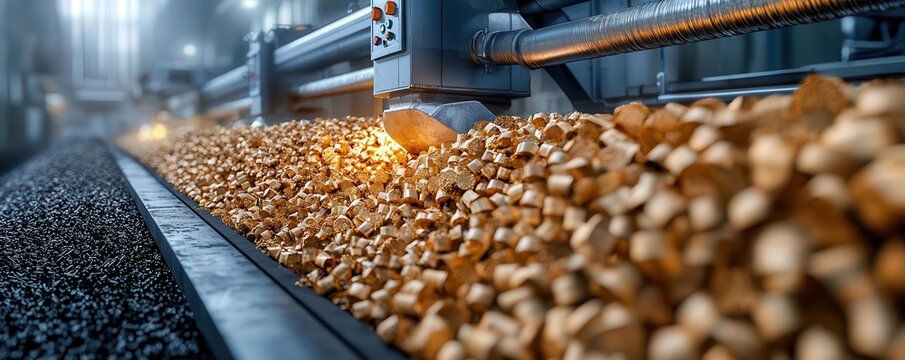
As the world shifts toward cleaner energy, biomass briquettes from natural sources are emerging as a highly eco-friendly alternative to fossil fuels. In addition, these renewable fuel blocks are made from agricultural residues, forestry waste, and other natural materials.
This approach not only produces sustainable heat and energy but also reduces waste, lowers dependency on non-renewable fuels, decreases deforestation, and improves agricultural waste management.
To learn more about the production process of briquettes from natural materials, you can visit the following link: Natural Material Briquette Production.
What Are Biomass Briquettes
Biomass briquettes are solid fuel blocks produced by compressing organic matter, including crop residues, forestry by-products, and other natural materials. People use these briquettes for cooking, heating, and various industrial energy needs. Unlike coal and wood, biomass briquettes burn cleaner and emit fewer greenhouse gases.
Natural Sources of Biomass Briquettes
The raw materials for biomass briquettes from nature come from several renewable sources:
1. Agricultural Residues
Materials like rice husks, corn stalks, sugarcane bagasse, and coconut shells are plentiful but often discarded. Turning them into briquettes transforms waste into a valuable resource.
2. Forestry Waste
Sawdust, wood chips, and bark from logging and wood processing industries can be compressed into briquettes, reducing environmental pollution caused by open burning.
3. Energy Crops
Growers cultivate fast-growing plants such as elephant grass and miscanthus specifically for biomass briquette production.
4. Other Natural Wastes
Producers also use coffee husks, palm kernel shells, and nut shells as valuable raw materials.
Advantages of Using Biomass Briquettes from Natural Sources
-
Renewable and Sustainable: Biomass briquettes rely on renewable natural materials, ensuring a sustainable supply when managed responsibly.
-
Waste Management: Utilizing agricultural and forestry waste to produce briquettes reduces open burning and landfill waste, which are major environmental hazards.
-
Reduced Carbon Footprint: The combustion of biomass briquettes emits carbon dioxide, yet this is offset by the carbon absorbed by the plants during their growth, resulting in a carbon-neutral fuel.
-
Cost-Effective Energy: In many regions, biomass briquettes are cheaper compared to fossil fuels, providing affordable energy to rural and low-income communities.
-
Lower Emissions: Briquettes produce less smoke and particulate matter than raw biomass or coal, improving indoor air quality and reducing health risks.
Production Process of Biomass Briquettes
The production of biomass briquettes involves several key steps:
-
Collection and Preparation: Natural biomass is gathered and dried to reduce moisture content.
-
Grinding: The dried biomass is ground into fine powder for uniform compression.
-
Compression: Using mechanical presses or hydraulic machines, the powdered biomass is compressed under high pressure to form dense briquettes without any chemical additives.
-
Drying and Packaging: If needed, the briquettes undergo additional drying before being packed and prepared for distribution.
Applications and Future Potential
Households use biomass briquettes from nature for cooking and heating, while industries run boilers, brick kilns, and small power plants with them. As the demand for clean energy grows, the adoption of briquettes will likely increase.
Governments and environmental groups promote briquette production through training, subsidies, and research. Ongoing innovation focuses on improving efficiency, increasing energy density, and expanding feedstock options.
Conclusion
Biomass briquettes from nature provide a clean, renewable, and affordable energy option that also helps manage waste. By turning discarded organic materials into fuel, producers cut greenhouse gas emissions and support environmental sustainability. With greater awareness and technological progress, these briquettes can play a major role in the global shift toward greener energy.
For more information on sustainable energy solutions and eco-friendly innovations, visit Jacoid.